The Road Less Traveled: A Journey to Financial Freedom
Season 1, Episode 1
I was too broke to Go Bankrupt
It was 2010, and I was sitting at my desk in the sunroom of a two-bedroom apartment. A curtain hung across the doorway to give my makeshift “bedroom” some privacy. Depending on the night, I shared the place with five to seven other guys. Mattresses lined the dining room walls. We were a bunch of bachelors piling in together to save money.
In one corner of the sunroom sat my college textbooks. In the other sat a stack of manila envelopes, unopened. Every week or so, another one arrived, and I added it to the pile. Lis pendens. Foreclosure proceedings. Judgments. The papers just kept getting served.
It’s hard to study for exams when someone keeps knocking on your door to serve you papers. I didn’t know how to make it stop, but I figured if I filed for bankruptcy, the knocking would end. So I searched online for a local attorney and called to set up an appointment.
The receptionist told me it normally cost $800 to file.
“Thanks. Bye.”
Eight hundred dollars seemed like a fortune. I was too broke to go bankrupt.
I took the top half of the envelopes and started a second stack. My piles were going to need room to grow.
So how does a guy who’d been reading about financial freedom since he was a teenager end up too broke to go bankrupt? Let me back up.
The Early Seeds of Financial Freedom
The idea of financial freedom came to me early, from a purple book called Rich Dad Poor Dad. My older brother, Randy, had bought it, and I borrowed it from him in the early 2000s when I was a young teenager. I’d always been a reader, but this book was different. It was about money and the mindset it takes to build wealth. I was hooked.
Randy had more books by Bob Proctor and other self-help authors, and I read them all. Once I could drive, I started building my own library from trips to Barnes & Noble. I listened to every Zig Ziglar CD I could find. I can still finish his sentences from memory, and his voice will be ingrained in me forever:
“You can have everything in life you want if you will just help enough other people get what they want.”
Randy’s IOU
Randy once told me he could see me being a banker someday. I don’t know if he sensed my passion for finance, or if he said it because he’d found the savings box in my closet.
I was working at Sonic, and I saved all my tips in a shoebox for a future car. Randy was slowly losing his battle with addiction, and my savings started to disappear. He always left an IOU with a running balance, so I knew exactly how much he’d taken. I doubted it would ever be repaid.
So I bought a safe. One day I came home to find a hammer and a screwdriver on the floor, and paint chipped away where someone had tried to pry the door open.
Not long after, Randy came home early from rehab and took his own life. I often wonder what his life would have been like without the drugs and alcohol.
I keep his last IOU in that same safe. It’s one of my last memories of him.
Brother, your debt has been forgiven.
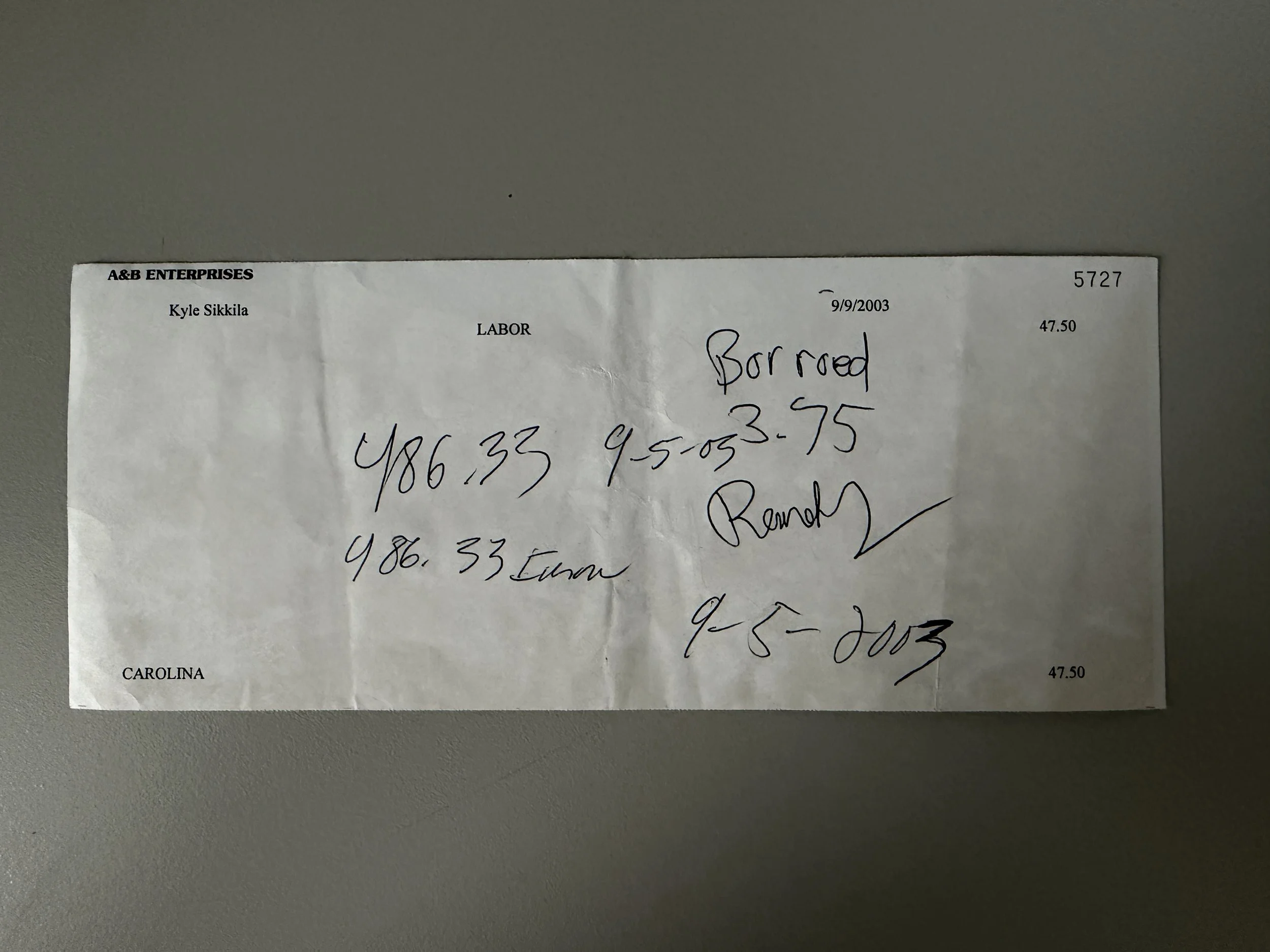
The last IOU from Randy
College, Round One
After high school, in the fall of 2004, I signed up for the Construction Engineering associate’s program at our local technical college. I’m still not sure why. I ended up going to work for my oldest brother and skipped the final exam in one of my classes. That was the only F I ever made, and it still haunts me.
It didn’t take long to realize I didn’t want to work in concrete or construction. I went to the library to research colleges, and an online quiz matched me with the finance program at Winthrop University. I applied and got accepted.
I moved into my dorm a week before classes for freshman orientation. But I had a sick feeling in my stomach. I hadn’t signed my student loan papers yet, and the amount of debt was stressing me out.
That weekend, I drove home to see Ariel, my girlfriend at the time. Her dad suggested North Greenville University: it was closer, and I could commute to save money. I spent that night at my parents’ house, and in the morning they were surprised to find me there. I told them I was going to North Greenville.
Monday morning, my mom drove me back to Winthrop in the minivan. While my classmates headed to their first day of classes, I packed up my dorm room. Friends I’d met during orientation had left notes on my door wondering where I was. I left a goodbye note for my roommate, along with my entire dorm package (bedding, toiletries, the works) and some books.
NGU started a week later, so I didn’t miss a single class. They didn’t offer a finance degree, so I signed up for accounting. I commuted to class and kept working part-time at Sonic.
Dropping Out
I finished my first year at NGU in the spring of 2006. By then I’d started earning extra money helping a friend assemble shower valves for his dad’s plumbing company. We spent nights soldering copper pipe to shower valves so the plumbers could install them in new construction houses. We made $5 a valve, and our job was to keep the installers stocked.
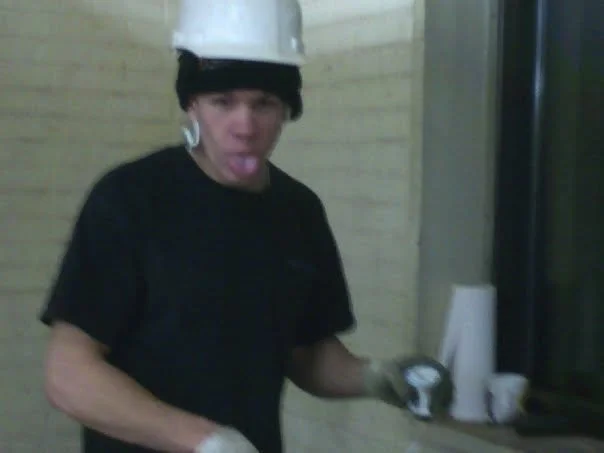
Soldering plumbing valves
Real estate was booming, and there was a lot of excitement in construction. One day that summer, I was picking up my paycheck when the bookkeeper mentioned she was moving to Charleston and needed someone to replace her. I’m not sure how it happened, but the next thing I remember, I was showing up and learning the systems while she handed off all her tasks to me.
It was a full-time job, which meant I couldn’t be a full-time student. But $15 an hour seemed like good money to me, and I promptly bought a brand-new Toyota Corolla to replace the old beater truck I’d been driving.
I didn’t register at NGU that fall. I decided I’d rather make money.
Our First Flip
Sometime in 2007, my sister-in-law invited me to a real estate seminar. We left with a stack of Russ Whitney books and a dream. My brother owned a concrete company, but he decided he wanted to invest in real estate full-time.
That September, he found a fixer-upper, and we bought it as partners with a hard money loan. The lender’s office was in the same business complex where I worked as a bookkeeper. I floated most of the rehab costs on credit cards until we could get draws to pay me back, and my brother worked on the rehab full-time.
Then we did something smart. We had a surveyor redraw the lot lines and split a second lot off the property. We sold that lot to a builder the week before Christmas and made around $15,000. I felt rich. I spent most of my share on Christmas presents that year.
The following January, we sold the house for not much more than we had in it. Almost all of our profit came from the lot split, which would turn out to be a valuable lesson later in life:
Drawing lines on a survey is a lot easier than managing a rehab.
Growing a Portfolio
Over the next three months, we bought three more foreclosures. They all needed work, and our plan was to fix them up and rent them out. Our loans covered the purchase and a small part of the rehab, which didn’t leave much for reserves.
My brother and I were in very different situations. I had a full-time job and didn’t need to take any money out of the partnership. My goal was to keep every dollar invested and build a cash-flowing portfolio that could replace my W-2 income. My brother needed regular draws to pay his bills.
Our small reserves were gone fast, so we took out a line of credit on one of the rentals for more working capital. Somewhere in there, I also signed on a loan to help my brother buy a truck.
When I had no money left to give for draws, I sat down with my sister-in-law to go over their finances. That’s when I realized our partnership wasn’t going to work. But it was too late. All of our reserves were gone.
We did manage to get all three houses rented, and the rent covered the loan payments, as long as the tenants paid.
Back to College
By the end of 2008, the economy was starting to collapse. Lehman Brothers had filed for bankruptcy that fall. I was still a bookkeeper, but I could see the writing on the wall. Not many builders were paying their bills, and payroll was getting tight.
I signed up for evening classes at Greenville Technical College for the spring of 2009. They had a transfer program with USC Upstate, and I was going to get my accounting degree.
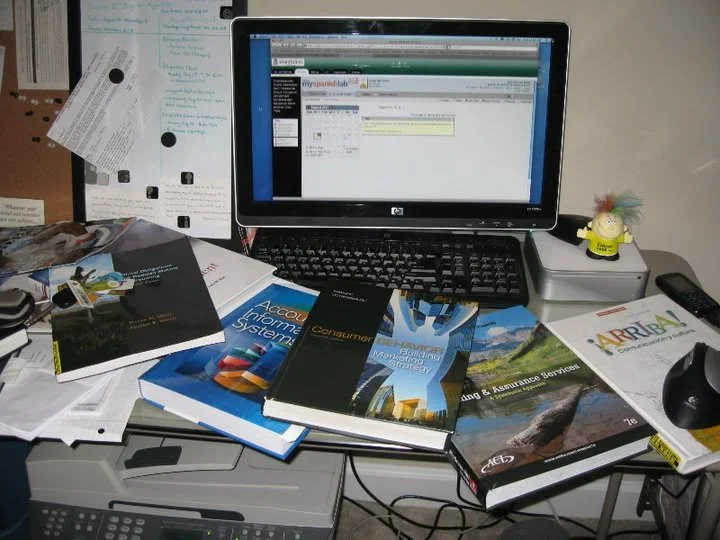
By then the plumbing company had laid off most of its employees, and the few of us left were working in the field. In May, my cousin and I were on a job in Charleston when the manager called. It was our last day. It felt surreal. We laughed as we installed the last faucet.
When we got home, I signed up for unemployment and loaded up on summer classes to earn as many credits as I could. Between what transferred from NGU and my semester at Greenville Tech, I only needed three more semesters to graduate with my bachelor’s degree from USC Upstate. It was going to be a busy 18 months.
Fall 2009: Studying and Stocking Shelves
Unemployment helped pay the bills while I looked for another job. I found one on the Flow Team at Target, the crew that shows up at 4 a.m. to unload the trucks and stock the shelves. My brother let me move into his basement apartment for free to offset the balance he owed me from our real estate business.
Calling It Quits on Real Estate
We still had tenants, and the rentals were breaking even. Then, around the middle of 2009, all of our tenants stopped paying. I didn’t know how to make the loan payments, so I stopped paying too.
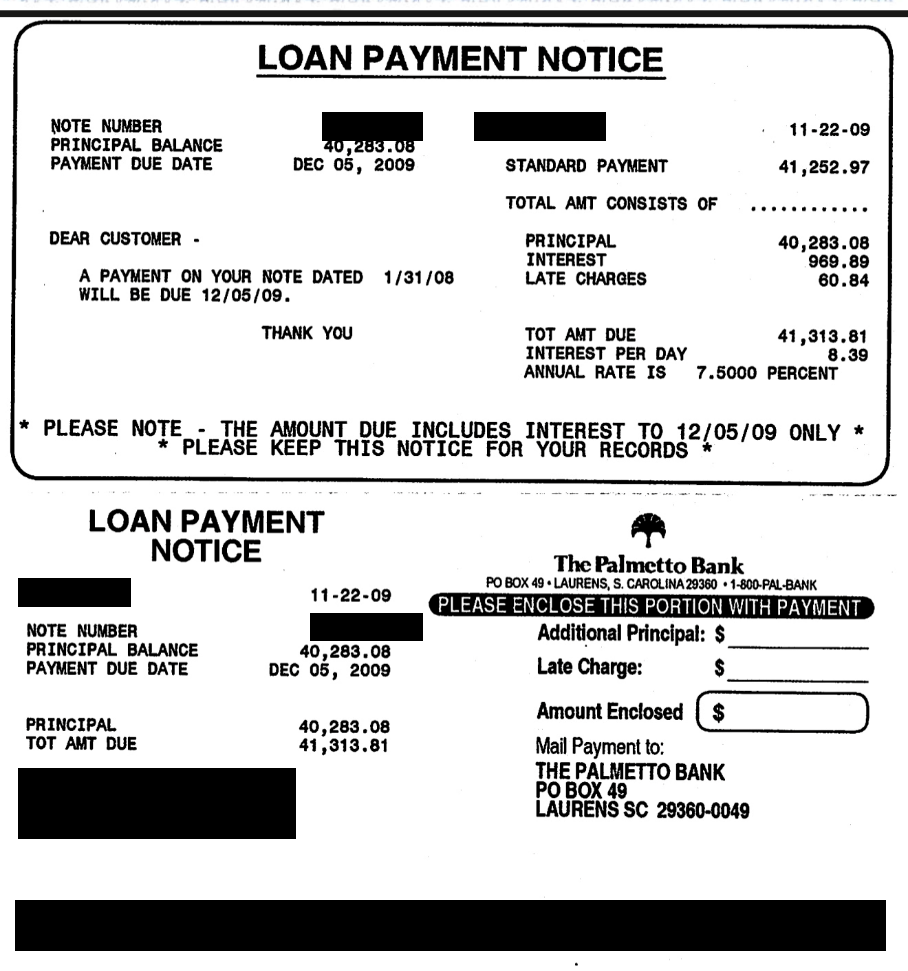
Final loan payment notice: balance due $41,313.81
By the end of 2009, the houses were all vacant, and the due-in-full notices started arriving. In hindsight, I should have tried short sales, but I didn’t know about them at the time, and I was too busy with school to deal with any of it. By 2010, every house was in foreclosure. My credit was ruined.
I got another job at a furniture store and moved out of my brother’s basement in the middle of 2010.
Which brings me back to that sunroom, and the stack of foreclosure papers growing in the corner. I’m still not sure how they figured out where I lived.
Have you ever had a stack of envelopes you were afraid to open? You’re not alone. Share your story in the comments, and come back for Episode 2.